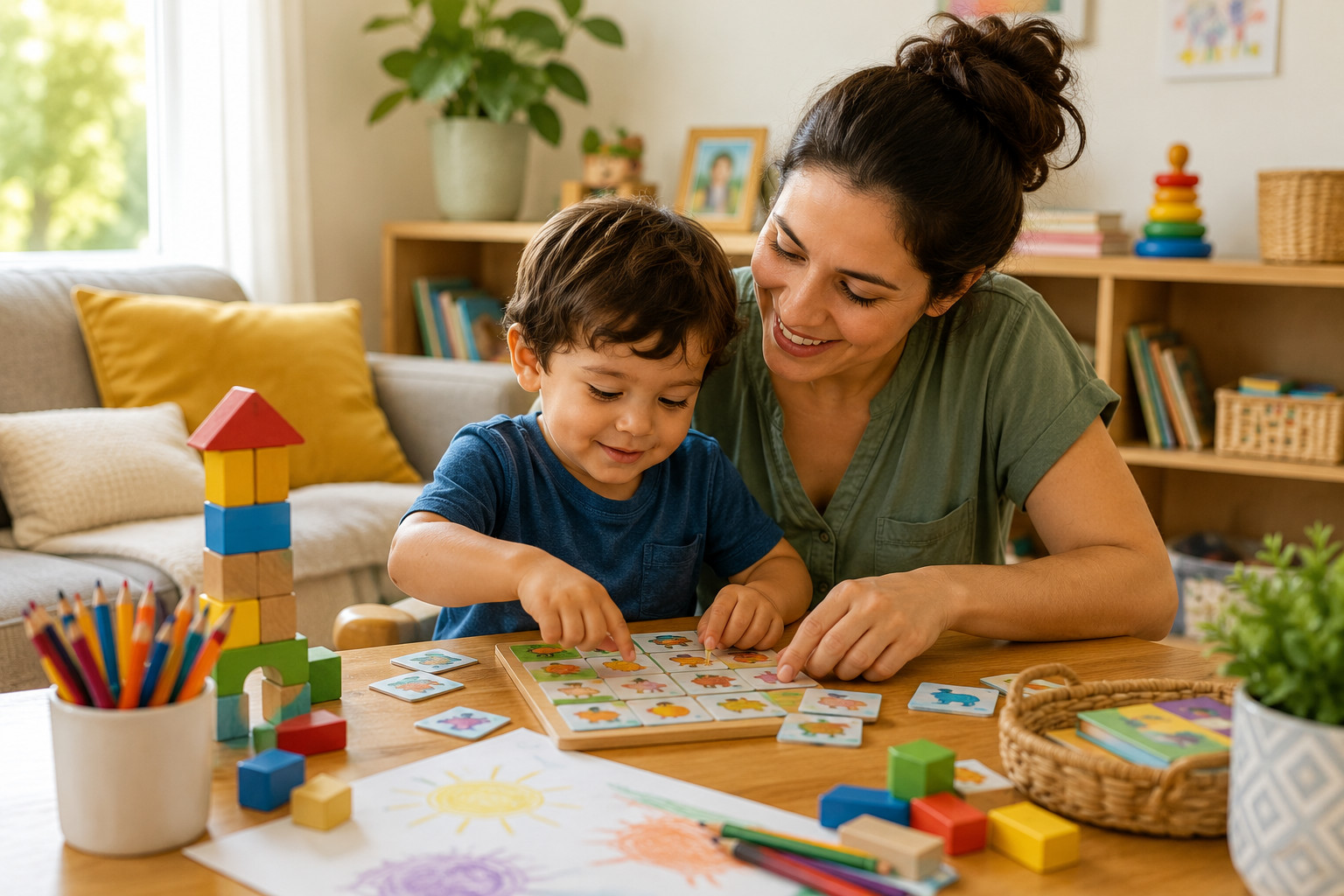
Every child moves through the world at their own pace, but child development research gives us reliable markers of what kids are ready for at different ages — and what kinds of play and interaction actually support their growth. The good news for parents: you don't need expensive toys or elaborate lesson plans. Some of the most powerful developmental activities happen with things you already have in your kitchen drawer.
Below is a practical, age-by-age guide to activities that meet children where they are, broken down by the developmental domains they support: physical (fine and gross motor), cognitive, language, social-emotional, and sensory.
Why "Developmentally Appropriate" Matters
Developmentally appropriate practice means choosing activities that match a child's current abilities, while offering just enough challenge to help them grow — what psychologist Lev Vygotsky called the "zone of proximal development." An activity that's too easy leads to boredom; one that's too hard leads to frustration. The sweet spot is where a child can succeed with a little effort, or a little help from you.
This also means letting go of the idea that more structure equals more learning. For young children especially, unstructured, child-led play is where the deepest developmental work happens.
Infants (0–12 Months)
At this stage, babies are building the foundations of trust, motor control, and sensory processing.
- Tummy time with a mirror. Place an unbreakable mirror in front of your baby during tummy time. This builds neck and shoulder strength while giving them a fascinating (if mysterious) face to look at.
- Peekaboo. This isn't just fun — it helps infants begin to grasp object permanence, the understanding that things continue to exist even when out of sight.
- Narrate everything. Describe what you're doing as you go about your day ("Now I'm washing the blue cup"). Babies absorb language long before they can produce it, and this steady stream of speech builds vocabulary foundations.
- Textured object exploration. Offer safe household items with different textures — a soft washcloth, a wooden spoon, a crinkly (BPA-free) wrapper — for supervised sensory exploration.
- Reaching and grasping games. Dangle a soft toy just out of reach to encourage stretching, reaching, and eventually crawling.
Toddlers (1–3 Years)
Toddlers are testing independence, building language rapidly, and refining motor skills.
- Pouring and scooping. Set up a small bin with dry rice, pasta, or water, along with cups and spoons. This strengthens fine motor control and introduces early math concepts like "full" and "empty."
- Simple sorting games. Sort laundry by color, or toys by size. Sorting is a foundational cognitive skill that precedes later math and categorization abilities.
- Dancing to music. Movement to music builds gross motor coordination and body awareness, and gives toddlers an outlet for big feelings.
- Naming feelings. When your toddler is upset, name the emotion ("You're frustrated because the tower fell"). This is one of the simplest, most effective ways to build early emotional regulation.
- Cardboard box play. A box becomes a car, a boat, a house. Open-ended materials like this support imaginative and symbolic thinking, a major cognitive milestone at this age.
Preschoolers (3–5 Years)
This is the age of "why," pretend play, and the first sparks of literacy and numeracy.
- Pretend play with everyday props. Set up a pretend kitchen, store, or post office using household items. Pretend play builds language, social skills, and executive function (the ability to plan and follow multi-step scenarios).
- Letter and sound hunts. Look for objects around the house that start with a target letter. This builds phonemic awareness, a key precursor to reading.
- Simple cooking together. Let your child stir, measure, or tear lettuce. Following steps in sequence builds executive function, and measuring introduces early math.
- Obstacle courses. Use couch cushions, chairs, and blankets to build a course to crawl, jump, and balance through. This develops gross motor planning and body coordination.
- Open-ended art. Skip the coloring book in favor of blank paper, crayons, and no instructions. This nurtures creativity and fine motor control without the pressure of "getting it right."
- Turn-taking games. Simple board or card games (like matching or Candy Land) introduce the idea of rules, waiting your turn, and handling both winning and losing.
Early Elementary (6–8 Years)
Kids at this stage can handle more complex thinking, longer attention spans, and cooperative play.
- Building and construction challenges. Give your child LEGO, blocks, or recycled materials and a challenge ("build a bridge that can hold this toy car"). This builds spatial reasoning and problem-solving.
- Journaling or drawing a comic strip. Encourage kids to record their day in words or pictures. This builds writing fluency and self-reflection.
- Cooking with measurements. Move beyond stirring to actual measuring and following a recipe. This reinforces fractions and sequencing in a hands-on way.
- Board games with strategy. Games like checkers or simple strategy card games build planning, patience, and the ability to think a few steps ahead.
- Chores with real responsibility. Assign an age-appropriate chore that's fully theirs (setting the table, feeding a pet). This builds a sense of competence and responsibility.
Tips That Apply at Every Age
- Follow their lead. A child deeply absorbed in an activity — even a "simple" one, like stacking cups for the tenth time — is doing important developmental work. Resist the urge to redirect them to something that looks more advanced.
- Build in repetition. Children often want to do the same activity over and over. Repetition is how skills become automatic, not a sign that they're bored or stuck.
- Narrate and ask open questions. Instead of quizzing ("What color is this?"), try describing and wondering aloud ("I notice this one is bigger — I wonder what would happen if we tried the other one").
- Let struggle happen. A little frustration while a puzzle piece won't fit is part of the learning process. Stepping in too quickly can rob children of the satisfaction of figuring it out themselves.
- Keep screens as a supplement, not a substitute. Hands-on, relational play does things for the developing brain that passive screen time cannot replicate, particularly for children under six.
You don't need a curriculum to support your child's development — you need attention, a bit of intention, and materials you likely already have at home. The most developmentally rich moments often come from ordinary activities: pouring water, sorting socks, building a blanket fort, or simply talking through what you're doing together. What matters most isn't the activity itself, but that it's pitched at the right level of challenge and done with real engagement from both of you.